Your gateway to a healthcare career in Southwest Norway
Considering a healthcare career in Norway and wondering where to begin? This page gives you a clear overview of how the system works in Southwest Norway, what qualifications and language skills are required, and what life as a doctor or nurse looks like in our region.
If you want to take the first step towards exploring opportunities, you can register your interest and our team will follow up with information and support, and facilitate dialogue with employers when relevant.

Useful information
How healthcare is organised in Norway
Healthcare in Norway is publicly funded and built on two levels.
Specialist healthcare (hospitals)
Norway’s hospitals are organised as publicly owned regional trusts. Each trust is responsible for delivering specialist healthcare within its area, including hospital treatment, emergency medicine, surgery, maternity care, mental health services and ambulance services. This model ensures equal access to care and consistent quality across the country.
In Southwest Norway there are three hospital trusts:
Helse Stavanger (Stavanger University Hospital)
Covers large parts of Rogaland and provides a full range of specialist services, including Norway’s fourth-largest university hospital.
Helse Fonna
Covers Haugalandet, Sunnhordland and parts of Hardanger. Services include acute medicine, surgery, internal medicine, psychiatry and ambulance operations.
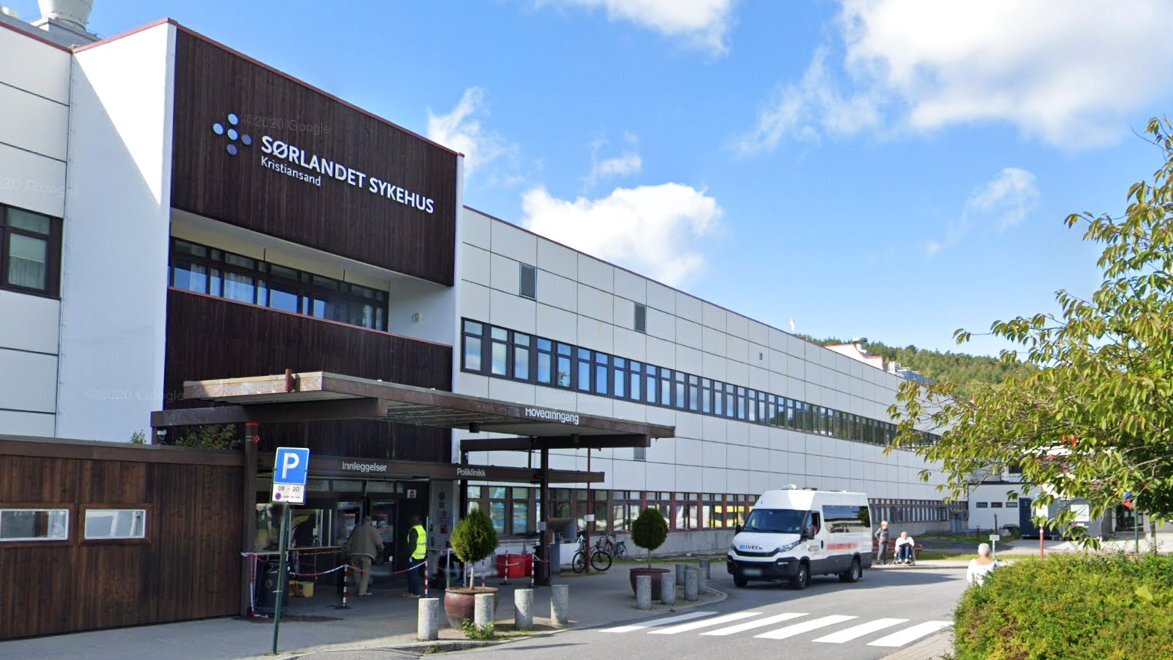
Sørlandet Hospital Trust
Covers the entire Agder region, with hospitals in Kristiansand, Arendal and Flekkefjord. Provides emergency care, surgery, intensive care, paediatrics, psychiatry and several specialist departments.
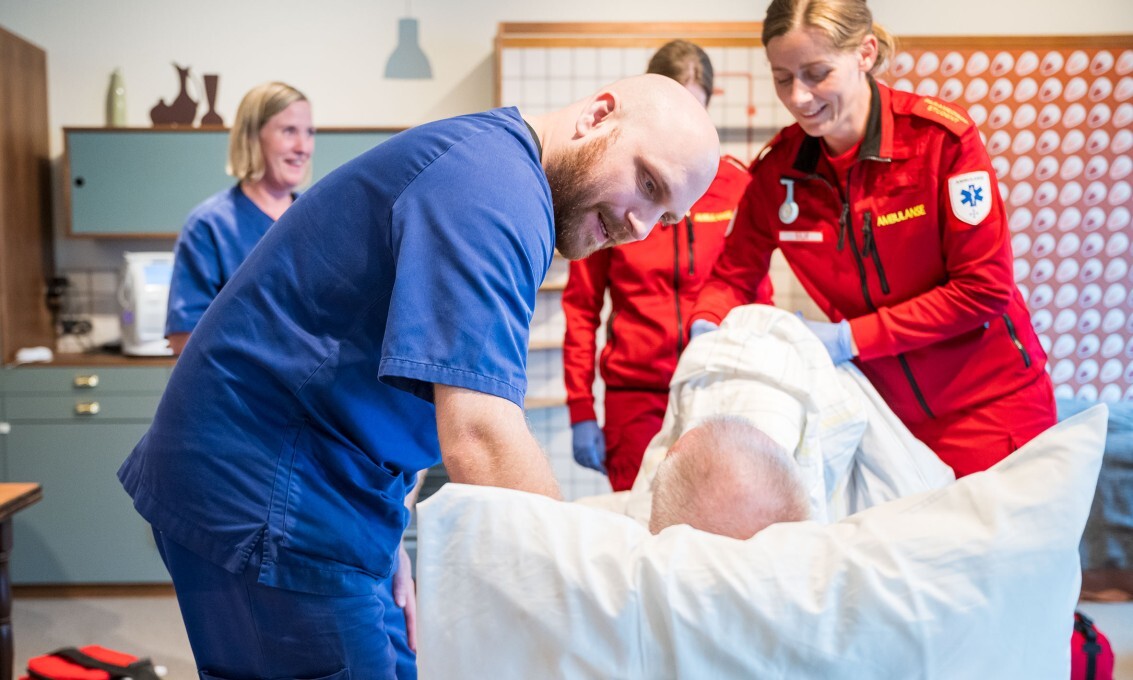
Across these three trusts, emergency medicine is available around the clock through hospital emergency departments, ambulance services and air ambulance units when needed. Hospitals and prehospital services work closely together to ensure fast and coordinated response throughout the region.
Primary and municipal healthcare
In Norway, many essential health services are organised and delivered by the local municipalities. This level of care focuses on prevention, everyday treatment and long-term follow-up, and is designed to provide residents with accessible healthcare close to home.
Municipal responsibilities include:
- General practitioners (GPs) through the personal doctor scheme
- Health centres (Helsestasjon) for children and young people
- Nursing homes and long-term elderly care
- Home nursing services
- Public health and preventive care
- Rehabilitation and physiotherapy services
- Mental health and substance use follow-up at community level
Doctors, nurses and other health professionals may work either in municipal services or in hospitals, depending on their role and area of specialisation.
Language requirements and training
For healthcare professionals educated within the EU/EEA, Norway does not require formal documentation of language proficiency in order to obtain authorisation as a doctor or nurse. This is because EU/EEA regulations ensure mutual recognition of professional qualifications across member states. However, applicants who obtained their education outside the EU/EEA must provide proof of Norwegian language skills as part of the authorisation process. This requirement ensures that their professional background is assessed according to Norwegian standards for safe and effective communication in healthcare.
Regardless of where you were educated, strong Norwegian language skills are essential once you start working with patients. While most Norwegians speak English well, clear communication in Norwegian is critical for patient safety, accurate documentation, effective teamwork and successful integration into the workplace.
Most healthcare employers require a minimum of B1 level in Norwegian before clinical work can begin. In certain specialist fields where the need for personnel is particularly urgent, exceptions may occasionally be made, but this is not common and depends on the regional health trust’s specific policies. Ultimately, solid Norwegian skills remain a prerequisite for delivering safe, high-quality care.
Southwest Norway collaborates with a provider of intensive Norwegian courses tailored to healthcare professionals, with a strong focus on medical Norwegian. They offer online teacher-led instruction as well as on-site classroom courses once healthcare workers have relocated to Agder or Rogaland.
Parts of the language training may be financially supported through the Targeted Mobility Scheme (TMS). To qualify for TMS support, applicants must meet specific criteria:
- The application must be submitted before the course starts, preferably at least three weeks in advance.
- The course must not exceed 16 weeks in duration or cost more than EUR 2 200 (as of 2025).
Authorisation and licensing
To work in Norway, healthcare professionals must apply for authorisation from the Norwegian Directorate of Health.
Typical processing time: 3–5 months
Application fee: approx. NOK 2 500
Required documentation generally includes academic transcripts, proof of identity, a Certificate of Good Standing, and verified translations if needed.
Link: Authorisation and Licence for Health Personnel – Helsedirektoratet
Working conditions and salary
Salary levels in Norway are regulated through national collective agreements, and both hospitals (health trusts) and the municipal primary healthcare services follow these frameworks. While actual pay varies with seniority, specialisation, local agreements and the number of shift hours worked, the following ranges give a realistic picture of what healthcare professionals can expect in Agder and Rogaland.
Nurses
The base salary for a newly graduated nurse typically starts around NOK 500 000–525 000 per year, depending on whether the position is in a hospital or in a municipality.
With several years of experience, the base salary gradually increases and often moves into the range of NOK 580 000–620 000.
Specialist nurses - such as intensive care, anaesthesia, or operating theatre nurses - have higher starting levels and may typically have a base salary between NOK 580 000 and 700 000, depending on seniority and speciality.
However, base salary is only part of the overall earnings. Because most full-time nursing positions involve a shift schedule, including evening, night, weekend and holiday shifts, the total annual income is usually higher. Working every third weekend is standard in many units, and these “unsocial hour” supplements can significantly increase pay. For a full-time nurse who works a normal rotation with regular evening, night and weekend shifts, total income often ends up in the range of NOK 580 000–750 000 even early in the career, and experienced or specialist nurses with heavier shift loads may earn NOK 700 000–800 000 or more annually.
Physicians/doctors
Physicians have significantly higher salary levels, again depending on specialisation, responsibilities, and duties. A doctor without specialist training typically earns a base salary equivalent to roughly NOK 1–1.3 million per year. Fully qualified medical specialists - such as consultants in hospital departments - commonly earn base salaries around NOK 1.25–1.4 million, and in some specialities even higher. The total income for physicians is also affected by additional duties. On-call rotations, night-time responsibilities, weekend work and emergency duties can add substantial amounts on top of the base salary, meaning that many specialists have an annual income comfortably above their base level.
Shift work is a key driver of wage variation for both nurses and doctors. Evening, night, weekend and holiday pay supplements are always added on top of the base salary and depending on how much on-call or rotation work is required, these supplements can represent a 20–40% increase in annual earnings. This is particularly relevant for specialists with frequent on-call responsibilities or for nurses in acute clinical departments.
Across both sectors, opportunities for further education and specialisation are well established. Employers in both Agder and Rogaland often support postgraduate training for nurses (such as intensive care or theatre nursing) and specialisation for doctors. Additional qualifications and seniority typically lead to higher pay scales over time as well as more advanced roles within the healthcare system.
Income tax
You can find more information about income tax here: Tax for individuals - The Norwegian Tax Administration

Professional associations and worker rights
Many doctors and nurses join professional unions, which provide:
- Collective bargaining
- Legal advice
- Professional development
- Insurance options
- Peer networks
Main unions:
Recruitment and interview process
When you register your interest, your profile will be reviewed and you may be contacted if your background matches current or upcoming needs in the region. In some cases employers follow up candidates individually, and in other cases hospitals or municipalities organise coordinated interview rounds, either locally in Norway or abroad when there is a larger recruitment initiative.
If your background aligns with the needs of an employer, we will get in touch to ask whether you would like to be connected. We also share relevant vacancies and information so you can decide what suits you before moving forward.
Support for partners and families
Through Southwest Norway we offer guidance for partners and spouses who are looking for work in the region. This includes information about the local job market, introductions to relevant services and advice on where to begin the search. Our aim is to help the whole family settle well, so your relocation becomes a positive and sustainable experience for everyone.
Living in Southwest Norway
Southwest Norway offers a setting where healthcare professionals can build a meaningful career while enjoying a balanced family life. The region has a strong public healthcare system, good schools, reliable public services and an everyday rhythm that makes it easier to combine work, family and free time.
Cities and towns such as Stavanger, Kristiansand, Haugesund and Arendal have a relaxed and friendly atmosphere, with cafés, culture, sport and nature all close by. English is widely spoken, and many families find that children settle quickly through school and local activities.
For partners, the wider regional labour market includes opportunities in education, engineering, IT, hospitality, public administration and the growing green industries, which makes dual-career planning more manageable.
Southwest Norway is a place where you can develop professionally, raise a family in a supportive environment and enjoy a well-balanced daily life.

Explore employers
Helse Stavanger
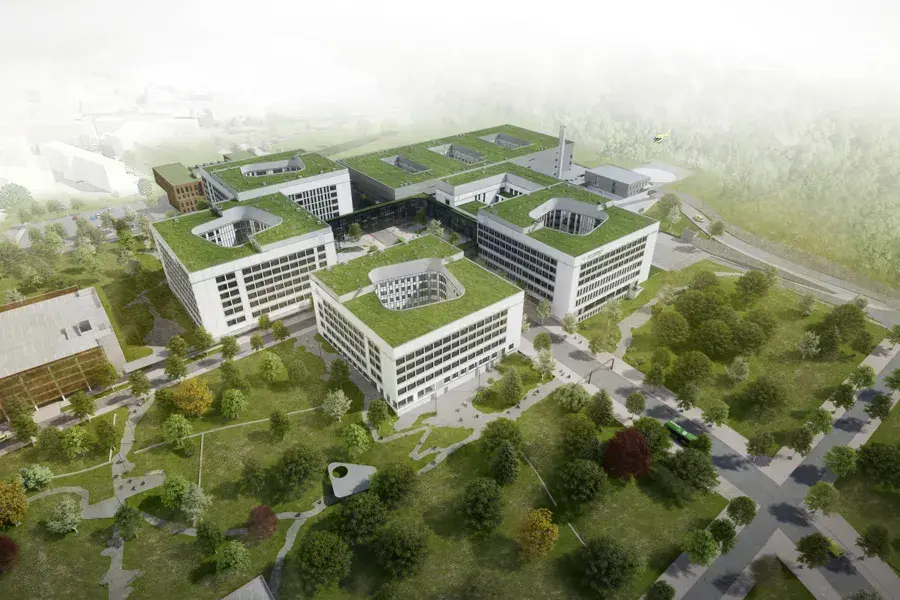
Helse Stavanger is home to Stavanger University Hospital, which has recently moved into a new modern facility with advanced technology and well-designed clinical spaces. The hospital is located close to the University of Stavanger and HelseCampus, creating strong links between patient care, research and education. Working here gives you access to a forward-looking environment where innovation, collaboration and professional development are part of everyday life.
Helse Fonna
Helse Fonna serves communities across Haugalandet, Sunnhordland and parts of Hardanger through several hospitals and clinics. The trust offers a wide range of services, including emergency care, surgery, internal medicine and mental health. Working here means joining close interdisciplinary teams in a region known for its coastline, islands and strong local communities, with good opportunities for both professional growth and an active outdoor life.
Sørlandet Hospital Trust
Sørlandet Hospital Trust provides specialist healthcare across Agder, with hospitals in Kristiansand, Arendal and Flekkefjord. The trust offers services such as emergency care, surgery, paediatrics, psychiatry and intensive care. Professionals working here join diverse clinical teams in a region known for its mild coastal climate, short commutes and a relaxed, family-friendly way of life.